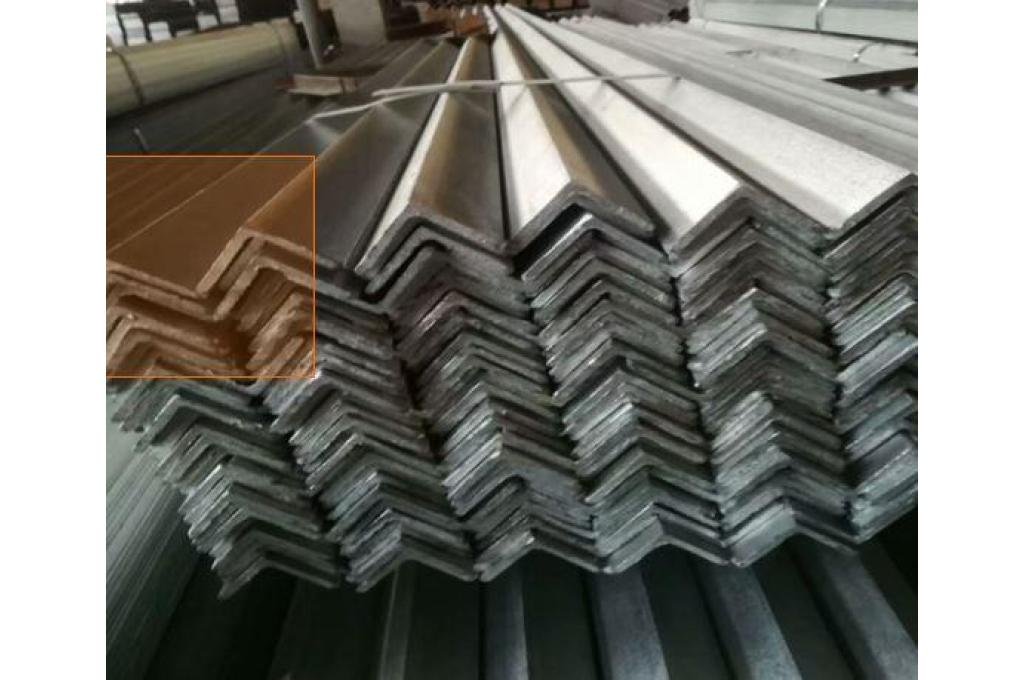
304 stainless steel angle steel is a highly versatile austenitic stainless steel widely recognized for its excellent corrosion resistance, mechanical strength, and adaptability, making it a preferred choice across many industries. Known as a “food-grade” stainless steel, it delivers superior performance in both decorative and functional applications, outperforming lower-grade steels such as 201, especially in challenging environments.
Its chemical composition includes 18%-20% chromium, 8%-10.5% nickel, and a maximum of 0.08% carbon. The chromium-nickel alloy forms a stable, protective chromium oxide layer on the surface, preventing corrosion from water, acids, alkalis, and atmospheric exposure. This composition also provides high tensile strength, ductility, and impact resistance, maintaining structural integrity under varying loads and low-temperature conditions.
304 stainless steel angle steel offers excellent weldability and formability, making it easy to fabricate into components such as handrails, kitchen equipment frames, chemical tank supports, architectural trims, and medical equipment structures. It finds applications in food processing, pharmaceuticals, construction, and marine industries. Although it is more expensive than grade 201, its long service life, low maintenance requirements, and simple cleaning with water or mild detergents make it a cost-effective solution. For extremely corrosive environments, grades like 316 may be preferred, but 304 remains the leading choice for most general and demanding stainless steel applications.
Read more304 stainless steel angle steel is a highly versatile austenitic stainless steel widely recognized for its excellent corrosion resistance, mechanical strength, and adaptability, making it a preferred choice across many industries. Known as a “food-grade” stainless steel, it delivers superior performance in both decorative and functional applications, outperforming lower-grade steels such as 201, especially in challenging environments.
Its chemical composition includes 18%-20% chromium, 8%-10.5% nickel, and a maximum of 0.08% carbon. The chromium-nickel alloy forms a stable, protective chromium oxide layer on the surface, preventing corrosion from water, acids, alkalis, and atmospheric exposure. This composition also provides high tensile strength, ductility, and impact resistance, maintaining structural integrity under varying loads and low-temperature conditions.
304 stainless steel angle steel offers excellent weldability and formability, making it easy to fabricate into components such as handrails, kitchen equipment frames, chemical tank supports, architectural trims, and medical equipment structures. It finds applications in food processing, pharmaceuticals, construction, and marine industries. Although it is more expensive than grade 201, its long service life, low maintenance requirements, and simple cleaning with water or mild detergents make it a cost-effective solution. For extremely corrosive environments, grades like 316 may be preferred, but 304 remains the leading choice for most general and demanding stainless steel applications.

 Pro
Zibo Camel Material Co., Ltd.
Registered 2 weeks
Pro
Zibo Camel Material Co., Ltd.
Registered 2 weeks
 Pro
Zibo Camel Material Co., Ltd.
Registered 2 weeks
Pro
Zibo Camel Material Co., Ltd.
Registered 2 weeks
 Pro
Zibo Camel Material Co., Ltd.
Registered 2 weeks
Pro
Zibo Camel Material Co., Ltd.
Registered 2 weeks

 Pro
Tianjin Zhongtian Heavy Industry Group Co., Ltd.
Registered 3 weeks
Pro
Tianjin Zhongtian Heavy Industry Group Co., Ltd.
Registered 3 weeks
 Pro
Tianjin Zhongtian Heavy Industry Group Co., Ltd.
Registered 3 weeks
Pro
Tianjin Zhongtian Heavy Industry Group Co., Ltd.
Registered 3 weeks
 Pro
Tianjin Zhongtian Heavy Industry Group Co., Ltd.
Registered 3 weeks
Pro
Tianjin Zhongtian Heavy Industry Group Co., Ltd.
Registered 3 weeks

 Pro
Tianjin Huaqi Youfa Pipeline Technology Co., Ltd.
Registered 3 weeks
Pro
Tianjin Huaqi Youfa Pipeline Technology Co., Ltd.
Registered 3 weeks
 Pro
Tianjin Huaqi Youfa Pipeline Technology Co., Ltd.
Registered 3 weeks
Pro
Tianjin Huaqi Youfa Pipeline Technology Co., Ltd.
Registered 3 weeks
 Pro
Tianjin Huaqi Youfa Pipeline Technology Co., Ltd.
Registered 3 weeks
Pro
Tianjin Huaqi Youfa Pipeline Technology Co., Ltd.
Registered 3 weeks
 Pro
Tianjin Huaqi Youfa Pipeline Technology Co., Ltd.
Registered 3 weeks
Pro
Tianjin Huaqi Youfa Pipeline Technology Co., Ltd.
Registered 3 weeks
 Pro
Tianjin Seamless Pipe Industry Group Co., Ltd
Registered 3 weeks
Pro
Tianjin Seamless Pipe Industry Group Co., Ltd
Registered 3 weeks
 Pro
Tianjin Seamless Pipe Industry Group Co., Ltd
Registered 3 weeks
Pro
Tianjin Seamless Pipe Industry Group Co., Ltd
Registered 3 weeks
 Pro
Tianjin Seamless Pipe Industry Group Co., Ltd
Registered 3 weeks
Pro
Tianjin Seamless Pipe Industry Group Co., Ltd
Registered 3 weeks
 Pro
Jiangsu Xuda Steel Industry Co., Ltd.
Registered 3 weeks
Pro
Jiangsu Xuda Steel Industry Co., Ltd.
Registered 3 weeks
 Pro
Jiangsu Xuda Steel Industry Co., Ltd.
Registered 3 weeks
Pro
Jiangsu Xuda Steel Industry Co., Ltd.
Registered 3 weeks
 Pro
Jiangsu Xuda Steel Industry Co., Ltd.
Registered 3 weeks
Pro
Jiangsu Xuda Steel Industry Co., Ltd.
Registered 3 weeks
 Pro
FOSHAN WINTON STAINLESS
Registered 3 weeks
Pro
FOSHAN WINTON STAINLESS
Registered 3 weeks
 Pro
FOSHAN WINTON STAINLESS
Registered 3 weeks
Pro
FOSHAN WINTON STAINLESS
Registered 3 weeks
 Pro
FOSHAN WINTON STAINLESS
Registered 3 weeks
Pro
FOSHAN WINTON STAINLESS
Registered 3 weeks
 Pro
FOSHAN WINTON STAINLESS
Registered 3 weeks
Pro
FOSHAN WINTON STAINLESS
Registered 3 weeks
 Pro
FOSHAN WINTON STAINLESS
Registered 3 weeks
Pro
FOSHAN WINTON STAINLESS
Registered 3 weeks

 Pro
Jiangsu Tisco Metal Co Ltd.
Registered 3 weeks
Pro
Jiangsu Tisco Metal Co Ltd.
Registered 3 weeks
 Pro
Jiangsu Tisco Metal Co Ltd.
Registered 3 weeks
Pro
Jiangsu Tisco Metal Co Ltd.
Registered 3 weeks

 Pro
Foshan Wutai Steel Co , Ltd.
Registered 4 weeks
Pro
Foshan Wutai Steel Co , Ltd.
Registered 4 weeks
 Pro
Zibo Camel Material Co., Ltd.
Registered 2 weeks
Pro
Zibo Camel Material Co., Ltd.
Registered 2 weeks



 Welcome!